Cell-cycle control · Dormancy · Translational cancer biology
Laboratory of Larisa Litovchick
We dissect molecular mechanisms that enable cells to stop dividing and to remain dormant, with the goal of identifying vulnerabilities of dormant cancer cells and strategies to overcome chemoresistance.
Research focus
From molecular mechanism to translational insight
Our work focuses on the DREAM repressor complex and DYRK1A kinase as central regulators of quiescence and tumour dormancy. We combine proteomics, functional genomics and preclinical models to translate mechanistic insights into strategies that target dormant cancer cells.
Research →Programmes
Four thematic programmes
DREAM assembly and DYRK1A: molecular control of quiescence
How is DREAM assembled and regulated, and how does this control the switch between proliferation and quiescence?
See programme →02Quiescence, dormancy and chemoresistance
How do chemotherapy and microenvironmental signals induce a dormant/quiescent state that allows tumour cells to survive treatment?
See programme →03Downstream effectors: DNA damage response and transcriptional control
Which downstream pathways mediate the quiescent state and contribute to long-term survival of dormant cells?
See programme →04Translational priorities: biomarkers and therapeutic targeting of dormancy
Can we identify biomarkers of DREAM-mediated dormancy and test candidate approaches to eliminate dormant cells?
See programme →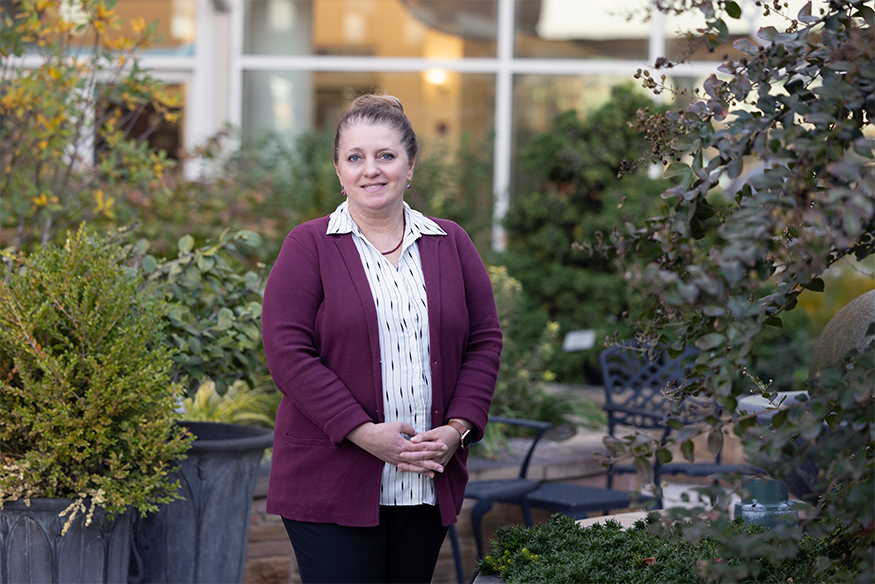
Principal investigator
Larisa Litovchick, M.D., Ph.D.
Principal Investigator, VCU Institute of Molecular Medicine
Dr Litovchick investigates the regulation of cell-cycle exit and quiescence, with a particular focus on DREAM complex assembly and DYRK1A kinase function and their roles in cancer dormancy and therapy resistance.
VCU profile →Join the group